Before the lights came up and the bands took to the stage at Sheffield’s legendary King Mojo club, there was another ritual taking place across the city centre.
For many young music fans in the 1960s, a night at the Mojo did not simply begin when the doors opened. It started hours earlier in the record shops, coffee bars and fashion boutiques of Sheffield, where the latest sounds, styles and friendships were forged.
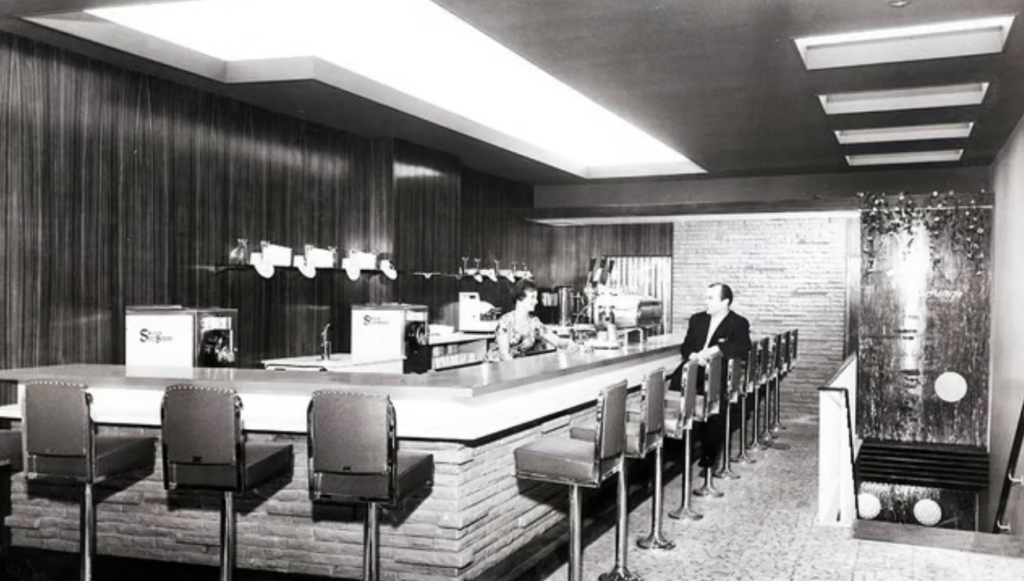
The brand new Side Walk coffee bar and restaurant opened on 3 October, 1960, and quickly became one of the key meeting places for the Mojo crowd when the venue arrived a few years later.
Dave Manvell remembers: “As we called it, the downstairs coffee bar was nicknamed ‘hell’ – decorated with black walls and lit with red lights. It was a key place for the Mojo crowd to meet and was frequented by up-and-coming Sheffield pop music artists.
“We’d normally end up back in here after our record purchases and proudly display our good or bad taste in music according to the derision we received from our mates.”
Side Walk cafe – entrance to ‘hell’ at the right
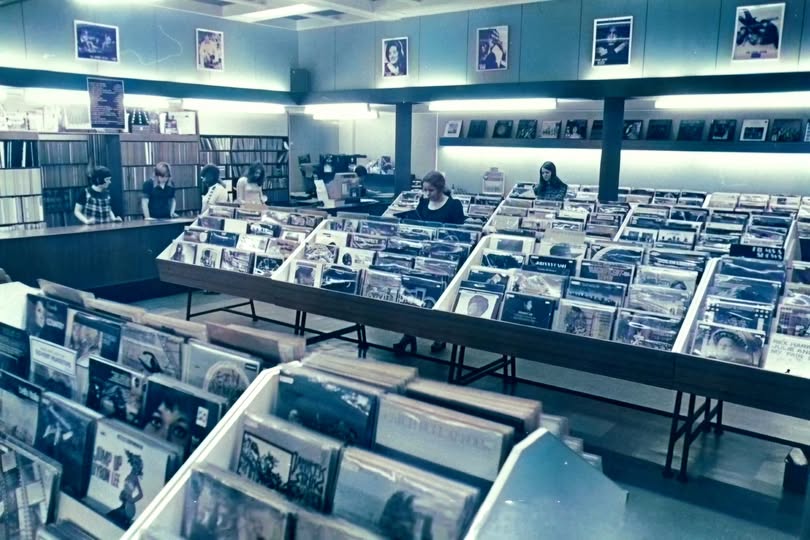
One of the biggest attractions on Chapel Walk for music fans was the record department at Philip Cann’s music shop.
Dave Manvell said: “Saturdays would always see Cann’s downstairs record department packed with teenagers coming to buy the records in the charts that week and any new LPs and EPs that had been released.
“The beauty of Cann’s was the record booths where you could listen to a single or LP before you bought it. The booths at a pinch held two people standing, but many more would try to cram inside. It was very chaotic – the whole place was heaving as people queued to have their choice of record played while the assistants tried to cope.
“Saturday was not a good time to buy an LP. Usually they would only let you hear one track, two if you were very lucky.
“For me the racks of guitars were always a major draw. I would stand and look at them in awe – very expensive American ones and their cheaper counterparts gleaming in their racks.
Cann’s was only one part of a much bigger musical map. Bradleys Records and Guitars on Fargate was another favourite, with records downstairs and instruments upstairs. Dave remembered it as “two floors of magic”, and it was there he bought his first electric guitar – a red Vox Pop with a single coil pickup. Wilson Peck on Leopold Street was another legendary stop, a shop where you could see Fender Stratocasters and Gibson guitars that seemed far beyond the reach of most young fans. Milners on Howard Street also drew in aspiring musicians, while Len Stuart, off the Moor, was known for a good selection of second-hand guitars.
Then there was Violet May on Flat Street, which Dave recalls as “an Alladin’s Cave of records beyond description”. It was the place to go for imported albums and rare singles. If Peter Stringfellow played something special at the Mojo, Violet May was often where people tried to find it afterwards.
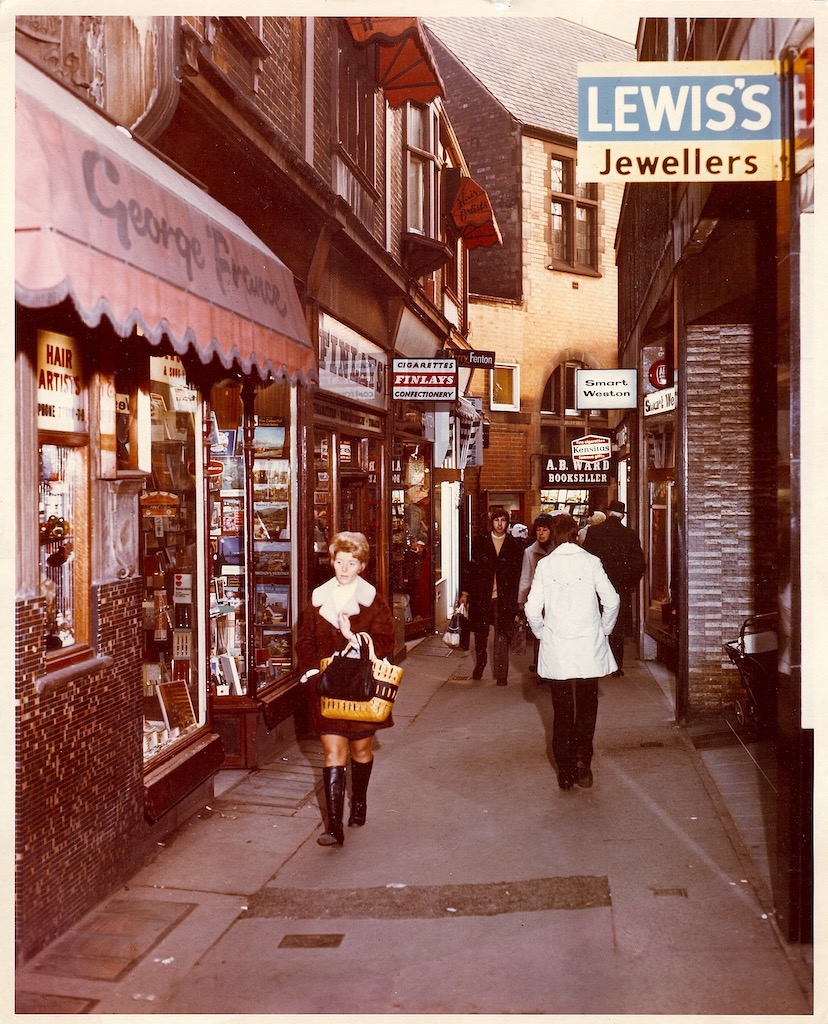
During the period, Chapel Walk undoubtably reached arguably the peak of its popularity.
“Harry Fenton and Smart Weston both stood virtually opposite one another” remember Dave.
“They followed every step of the fashion trends and were very good for Mod fashions.”
Richards catered for women looking for the latest styles, offering a wide range of clothes and shoes.
Other businesses included George France high-class ladies’ hairdressing salon, while Whitehead’s handicraft shop became particularly popular during the late 1960s when the “Summer of Love” brought a taste for homemade accessories.
Lewis Jewellers did a brisk trade in engagement rings – famously offering a free alarm clock with every purchase.
Elsewhere were tobacconists selling imported cigarettes such as Black Russian, Camel and Gauloises, along with cocktail cigarettes wrapped in brightly coloured papers. There was even a high-class confectioner where, Dave remembers with amusement, chocolate-covered ants were once on sale.
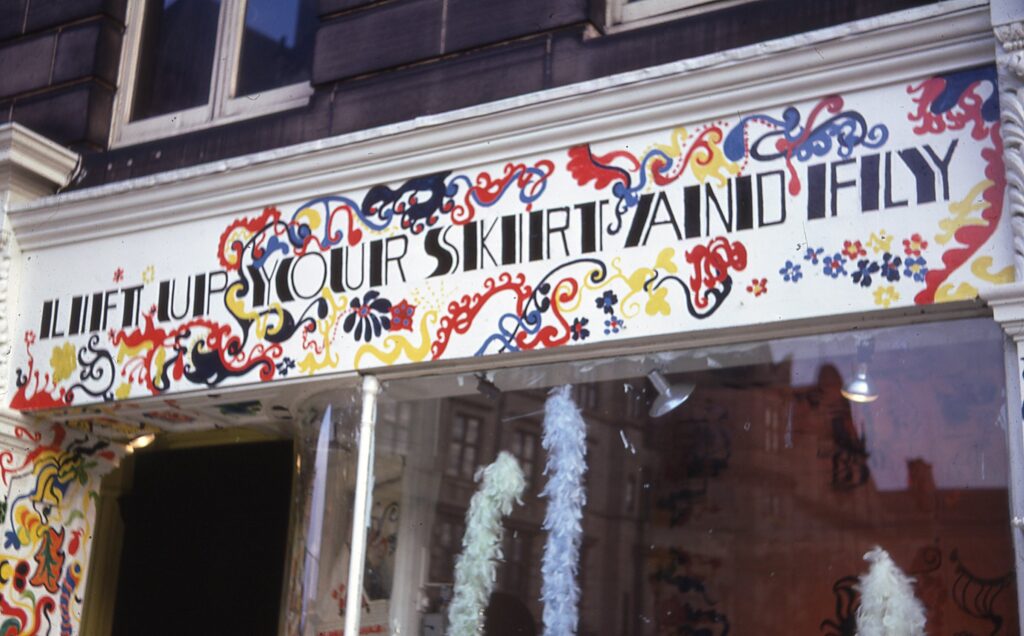
One of the most distinctive boutiques in Sheffield during the 1960s was Lift Up Your Skirts and Fly on Norfolk Street. The shop quickly became known for its bold designs and colourful atmosphere, reflecting the changing youth culture of the time.
Owned by Roger Howe, a friend of Peter Stringfellow, the boutique attracted a young crowd looking for something different from the traditional city centre fashion stores.
Dave Manvell remembers the shop as one of the most exciting places in the city for new styles.
“Sue Barfield ran the shop and her fellow art student friends painted the pop art murals on the shop front and walls. Roger would go down to London every week and bring back clothes that would sell out every weekend, so we started designing and making our own stuff with the help of my mum. This was one of Sheffield’s top boutiques of the time.”
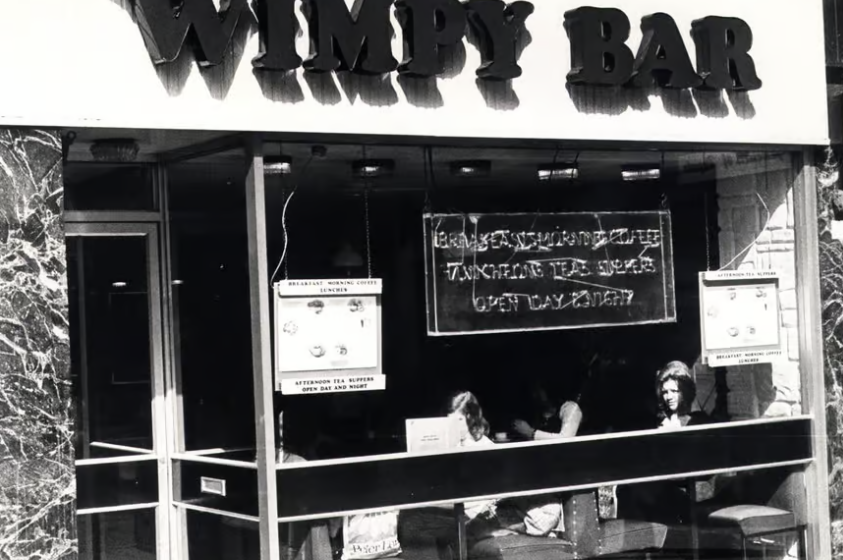
After the Mojo called time late night options were pretty limited – especially as the crowd were teenagers.
But there was one option – the Wimpy on Fargate.
Dave Manvell remembers:
“You could guarantee it would be quite busy with clubbers who had missed their last bus or train home.
“Most people had to wait until the early morning when the workers’ buses started running – and the Wimpy was the place to wait. But at least it was warm and dry.
“At one point I remember a refit that provided a Parisienne flavour with street scenes painted on the walls.”
Before heading to the Mojo, many young people gathered in Sheffield’s coffee bars and cafés. These places were more than somewhere to grab a drink. They were social hubs where records were discussed, fashions compared and plans made for the night ahead.
Dave Manvell remembers the Leprechaun Café on Glossop Road in Broomhill as one of the best-known meeting places.
“This was a particular favourite with the Mods and lines of scooters would be seen outside. There was a juke box and downstairs pinball machine. Lots of the local youths were Mojo members and would congregate there before catching the Inner Circular bus from near the café, which was a direct route to the Mojo.”
Other coffee bars also became regular stopping-off points for the Mojo crowd. Carver Street’s La Fav was popular on weekday evenings, Saturday daytime and Saturday night, often acting as a starting point before the evening artist appeared. The Shack, just off West Street, was another coffee bar favoured by Mods.
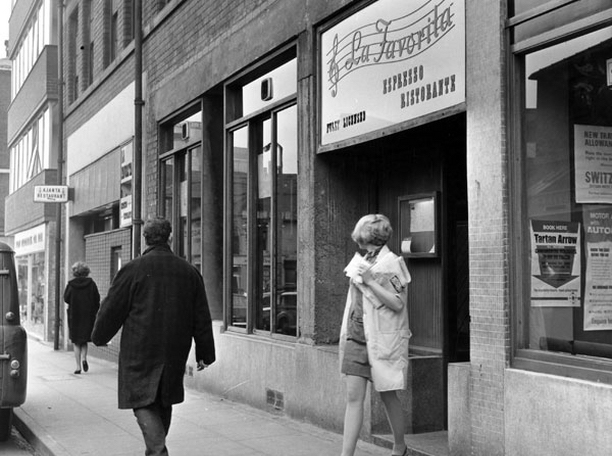
After the Mojo had closed, the night did not always end straight away.
Dave Manvell remembers the Ocelot Bar (sited at the end of Bramall Lane), as one of the places where Peter and Geoff Stringfellow and many of the Mojo artists went for food and drink late into the night.
Although often described as a restaurant, in practice it also served as one of those valuable late-night cafés where people could carry on talking long after the Mojo had shut.
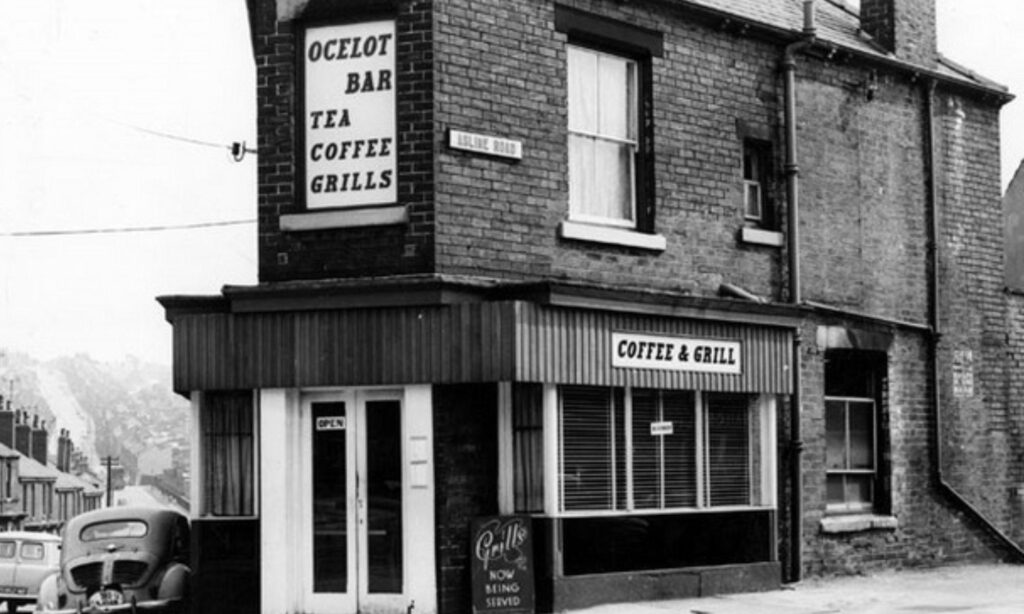
Another important stop was Wilson Peck on Leopold Street. It stocked records, sheet music and instruments, and for many aspiring musicians it was one of the most exciting places in the city centre to visit.
Dave Manvell remembers being particularly drawn to the guitars on display.
“I would stand and look at them in awe – very expensive American ones and their cheaper counterparts gleaming in their racks.”
For many young visitors, those gleaming instruments represented the possibility of forming a band of their own and joining the growing music scene that surrounded the Mojo.
Wilson Peck also played another role in Sheffield’s live music culture. The shop sold tickets for concerts at Sheffield City Hall, which was occasionally hired by Peter and Geoff Stringfellow when larger acts needed a bigger stage than the Mojo could provide. Artists such as the Rolling Stones appeared there, giving Sheffield audiences the chance to see some of the biggest names in popular music.
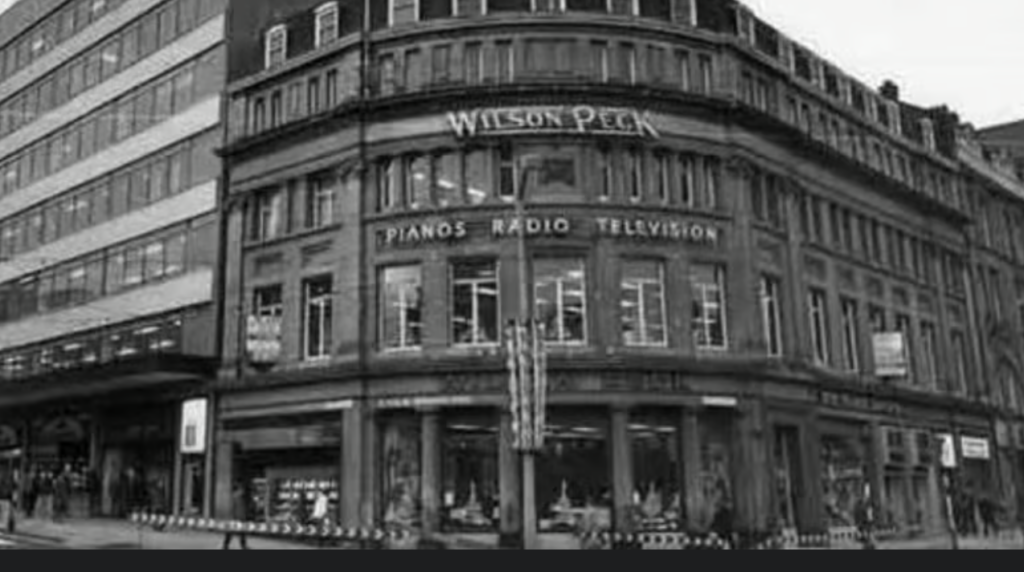
Sheffield was awash with places frequented by the Mojo crown. Shops, bars, meeting places and more.
Dolcis on the High Street was a popular stop for shoes, particularly among Mods looking for the latest styles . The Army Stores provided a very different look, a shop adopted by some of the city’s more individual dressers.
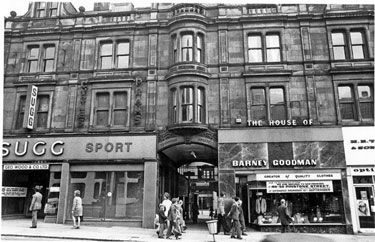
Clothing could also be found in larger stores such as C&A Modes and Peter Robinson, both of which attracted younger shoppers looking for the latest fashions. For those wanting something a little sharper, Jacksons the Tailor became known for its made-to-measure suits, while Barney Goodman was another respected city centre outfitter.
Scooter culture also had its place in the city’s pre-Mojo routine. Armando Scooters on Bramall Lane supplied the machines that would soon become closely associated with the Mod scene.
Some venues offered somewhere to gather before or after a night out. The Grand Hotel and the Grosvenor Hotel both had bars that attracted a lively crowd, while the Minerva Tavern developed a reputation as a meeting place for musicians and music fans.