The emergence
King Mojo was a short-lived but highly influential teenage club operating in Sheffield during the mid-1960s. It emerged at a moment when young people were beginning to assert their own cultural identity through music, style and social spaces of their own. Although its lifespan was brief, the club became one of the most important early catalysts for modern youth culture in the city. Its roots can be traced through earlier venues – namely the Black Cat and Blue Moon Club – and the landmark promotion of the Beatles at the Azena in Gleadless.
Music, style and identity
King Mojo was closely associated with the developing mod scene and the growing popularity of soul and, later in its life, flower power. It offered young people a place to hear new sounds, dress sharply and be part of something that felt modern and distinct from the post-war culture of their parents’ generation. Rather than fitting neatly into rigid subcultures, the club reflected a moment of transition, when tastes were evolving quickly and influences from London and the United States were beginning to reach Sheffield.
When new music found its way north
The venue emerged from a hunger among Sheffield’s young music fans to hear something new, authentic and alive. Inspired by early ITV broadcasts from the Manchester station, which showcased performances by emerging Black American musicians, a generation of teenagers found their ears opened to sounds rarely heard elsewhere.
Sheffield’s young audiences were acutely aware of what was happening in London, but the cost and effort of travelling south put most of it out of reach. That changed when Peter and Geoff Stringfellow brought the London scene to Sheffield. Suddenly, world-class performers — many at the very forefront of soul, R&B and beat music — were appearing on a small stage at 555 Pitsmoor Road.
King Mojo didn’t just reflect a scene — it created one, giving Sheffield its own place in a fast-moving musical moment that would leave a lasting mark on those who experienced it and see many of the artist go on to global fame.
The Stringfellows and the Mojo vision
The club played a formative role in the early careers of Peter and Geoff Stringfellow, long before their later prominence in British nightlife. Their ambition and understanding of what young people wanted helped transform King Mojo into a venue with a reputation that travelled well beyond its immediate neighbourhood. The club became known not only for its music, but for the atmosphere and sense of belonging it created.
Legacy and memory
Despite closing nearly six decades ago, King Mojo remains a powerful reference point in Sheffield’s cultural history. For those who experienced it, the club represented independence, confidence and the thrill of discovering something new. Its legacy lives on through personal memories, archive material and its recognised place in the story of how Sheffield’s modern music and nightlife culture began to take shape.
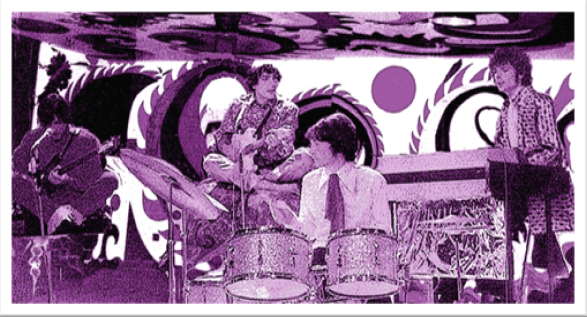
Pink Floyd At The Mojo All-Dayer
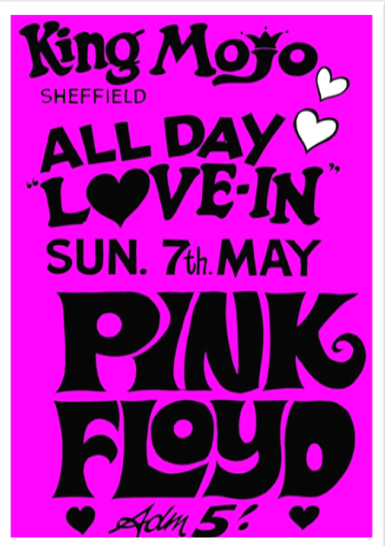
By 1967, Peter Stringfellow had begun experimenting with all-day events at the Mojo. Financially, Sundays made sense. Touring bands could be booked more cheaply as they passed through the city on their way to other venues.
One of the most memorable of these all-dayers took place in May 1967, when Pink Floyd arrived in Sheffield at the height of their early, psychedelic phase.
Dave Manvell had been at the club the night before and was asked to return early the next morning to help set up.
“I arranged to meet my girlfriend at the shops on Burngreave Road, but she was late. Anxious to get to the club, I made my way up the hill on my own.”
When Dave arrived, the band were already inside preparing for the show.
“When I got there, Pink Floyd were setting up.”
What followed was unlike anything most Sheffield audiences had seen before.
Building The Mojo Light Show
Dave remembers Susie Gawler-Wright, the band’s special effects artist, attempting to build the now-famous light show inside the club.
“Susie was perched precariously on a pair of steps trying to set up projectors and mix oil slides for the light show.”
The task was made even more difficult by the Mojo’s sprung dancefloor, which shifted underfoot as people moved around.
“As the Mojo floor was sprung, it moved every time someone walked on it. The trestles and steps looked like they might come crashing down at any moment.”
Dave stepped in to help steady things.
“I went over to try and hold the whole construction steady while she mixed the oil and water pouches for the slide projectors.”
When the band finally took to the stage, the result was extraordinary.
“Pink Floyd played against a backdrop of oil slides — a psychedelic mix of shapes and colours bleeding into one another, filling the room.”
For those inside the Mojo that day, it was a full sensory experience.
“The group and the crowd were alive with a wash of colour and sound.”
The Night The Future Arrived
Dave still recalls the impact of Syd Barrett’s playing.
“The spacey sounds of Syd Barrett’s Telecaster during Interstellar Overdrive and Astronomy Domine were unforgettable.”
It was more than just a gig. It was a glimpse of something new.
“A spectacle of music and colour — and a fantastic lead-in to the Summer of Love.”
Pink Floyd were still in their original line-up at the time, with Syd Barrett at the centre of the band’s sound and image. Their debut album, The Piper at the Gates of Dawn, and early singles such as Arnold Layne and See Emily Play had already begun to attract attention, and their experimental live performances were earning strong reviews in the music press.
For those packed into the Mojo that Sunday, it was a moment when Sheffield briefly connected with the cutting edge of a rapidly changing musical world.
Geno Washington and the Ram Jam Band
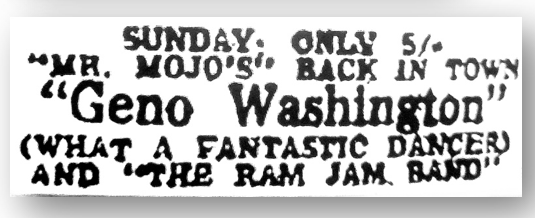
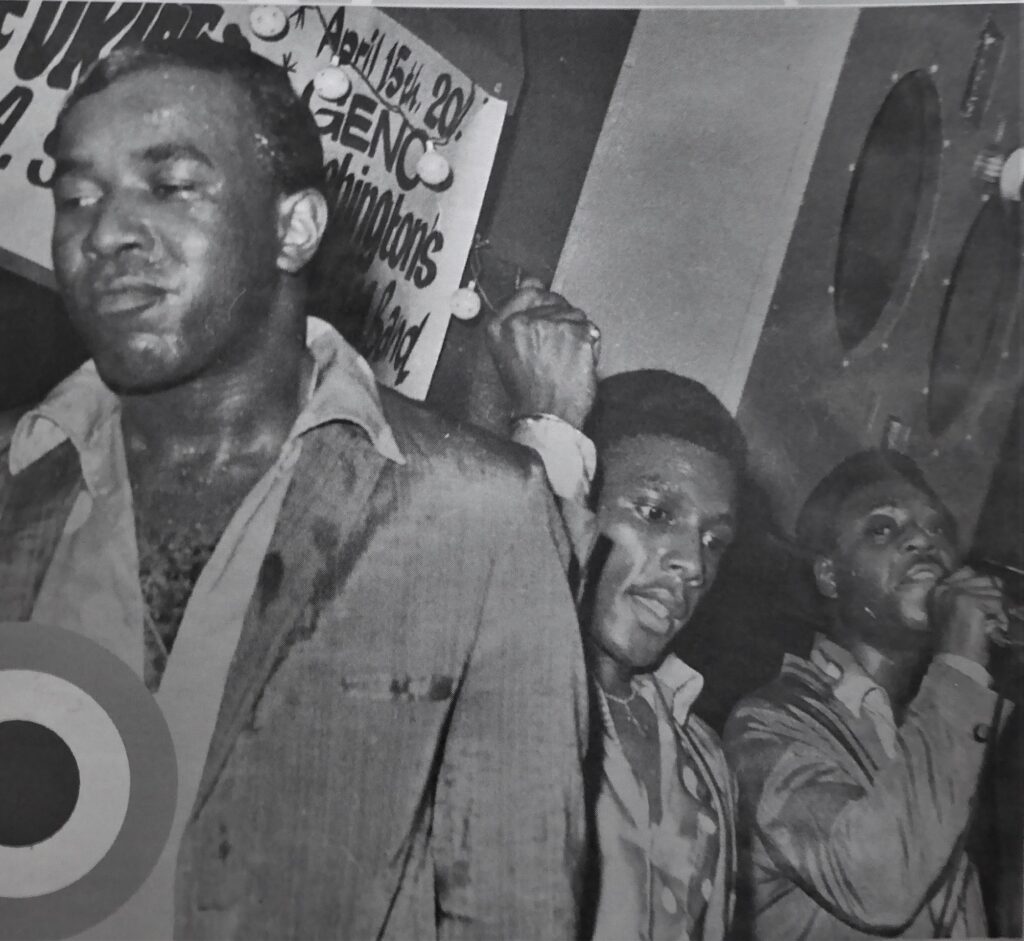
Geno Washington and the Ram Jam Band were firm favourites at the Mojo, regularly playing to packed houses.
Every inch of the club would be filled with a dancing, sweating crowd, joining in as Geno belted out hits such as ‘Hi Hi Hazel’, ‘Que Sera Sera’ and ‘Michael’.
Dave Manvell remembers the sheer energy of those nights:
“I remember being covered in sweat. Around 11 o’clock Peter Stringfellow would send us all outside while the club was prepared for the all-nighter, then at midnight we’d all pile back in again. My clothes were soaked through and my shoes were soggy – I decided there was no way I’d last the whole night on that occasion and left early.”
The band’s sound was tight and full, driven by a powerful combination of saxophones and Hammond organ, with Geno’s voice leading the groove over the guitars.
Geno and the Ram Jam Band were natural showmen. Once on stage, they were reluctant to leave it – and the crowd didn’t want them to.
They became true icons of the Mojo in its lifetime.
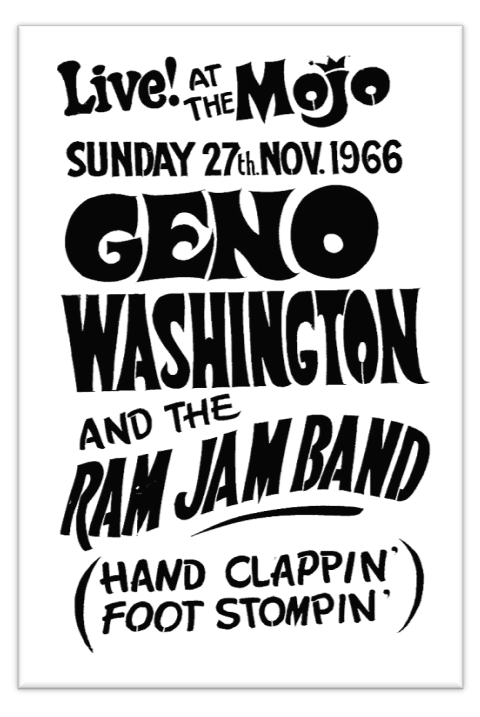
The end of the original Mojo definately wasn’t the end of the relationship.
Geno Washington even performed at Peter Stringfellow’s King Mojo-themed birthday bash at Sheffield’s Leadmill in the 2010s.
A Glimpse Of San Francisco At The Mojo
The Animals played the Mojo on several occasions, but one performance in particular stood out – remembered for a powerful rendition of ‘The House of the Rising Sun’ and for capturing a moment of change in both the band and the wider music scene.
By 1967, Eric Burdon and the band were on the verge of a new chapter. Their final appearance at the Mojo came shortly before leaving for San Francisco – a move that would immerse them in the emerging psychedelic culture of the Summer of Love.
For those in the club that night, it felt like a glimpse into something entirely new.
Dave Manvell remembers they arrived with a van full of equipment, transforming the stage before the show had even begun. Bottles and crates of Newcastle Brown Ale were scattered across the stage, while an elaborate lighting rig – including strobe beams originally fitted to aircraft – created a striking visual backdrop.
When the lights came on, the effect was extraordinary
Dave Manvell said: “The stage took on the appearance of a silent movie, with Burdon and the group moving in slow motion under the strobes. The whole audience was bathed in coloured light, creating an out-of-this-world, almost surreal atmosphere.”
The performance showcased material from ‘Winds of Change’, released later that year, marking the band’s shift towards a more psychedelic sound and the ideals of peace and love associated with the Summer of Love.
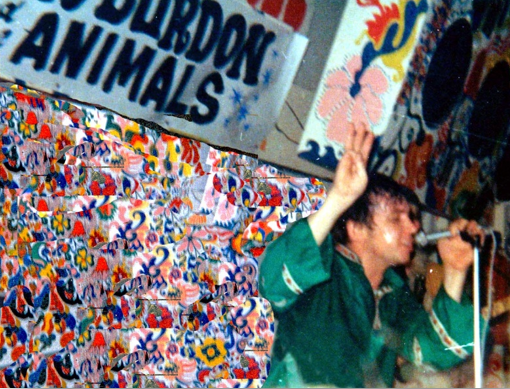
Tracks such as ‘San Franciscan Nights’ and ‘Yes I Am Experienced’ were brought to life by the light show, creating a spectacle of music and visuals that, for some, rivalled even the most experimental acts of the time.
“For me, it was a spectacle of music and sound equal to Pink Floyd’s show.”
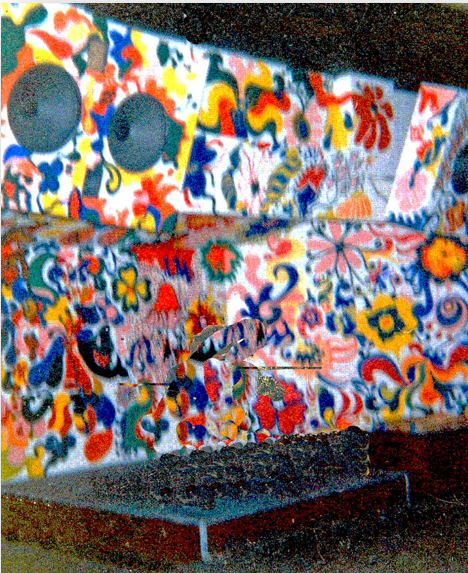
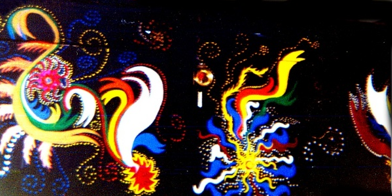
The night also highlighted the creative crossover happening within the Mojo itself. Eric Burdon was impressed by the artwork of Mojo artist Sue Barfield, whose murals adorned the club walls, and even expressed interest in having her paint his van – a reflection of the growing influence of psychedelic art and countercultural ideas.
The Pretty Things at the Mojo
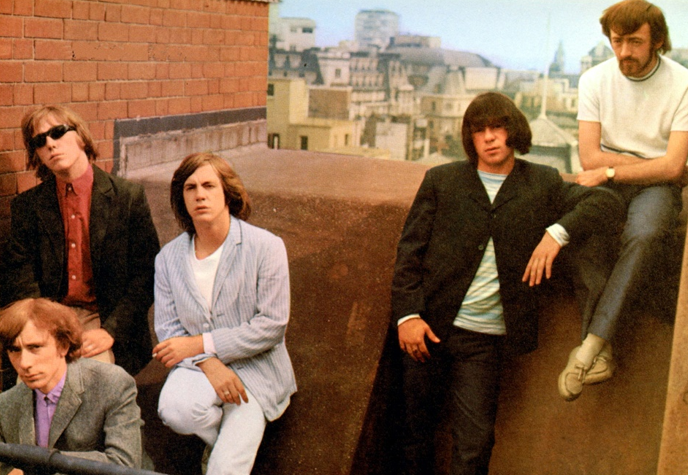
The band arrived at the Mojo with a reputation that was already well established. Their early singles, including ‘Rosalyn’ and ‘Don’t Bring Me Down’, had caused a stir, not just because of the records themselves, but because of the band’s appearance, attitude and sheer volume. They took the rough-edged image of the early British R&B groups a step further — scruffier, louder and more confrontational than most of their contemporaries.
Dave Manvell remembers the impact they made when they appeared at the club: “The Mojo was heaving with what I would have called a heavy rock crowd dressed in jeans and T-shirts. It was a loud and very sweaty night with a great atmosphere, which the group created when they hit the stage.”
One of the most revealing stories linked to the band’s appearance came from singer Phil May, who recalled a clash with Peter Stringfellow over the club’s strict dress rules.
“We arrived one night at the Mojo to find about 150 people standing outside. Peter had refused to let them in as they were wearing jeans. I told Peter we wouldn’t play unless he let them in. He was adamant that he wouldn’t let them in. We went across the road with Peter to the pub to discuss it. For about an hour or so he wouldn’t change his mind, but he finally relented as we were serious that if he didn’t let them in we wouldn’t play.”
May later claimed the dispute had an unexpected outcome.
“After that Peter always said we were his favourite group as we attracted lots of nubile females.”
Peter himself never forgot the volume of the night.
“They were at that time the loudest group around and I always blame my tinnitus on their performance at the club.”
The Pretty Things would go on to hold an important place in British rock history. Their debut album was later followed by S.F. Sorrow in 1968, widely regarded as the first rock opera, arriving before The Who’s Tommy the following year.
Where’s Eric? The Yardbirds at the Mojo
A group of us were into blues and R&B music, remembers Dave Manvell.
“One Saturday at a party, one of the gang turned up with the album ‘Five Live Yardbirds’, recorded live at the Marquee Club in London. It was played continually all night, with repeated requests for ‘Smokestack Lightning’ and ‘Good Morning Little Schoolgirl’.”
Eric Clapton joined the band in 1963 but was gone by 1965 following the release of ‘For Your Love’ – he deemed it too commercial. There was already a running joke among fans.
“Where’s Eric?” became a familiar line – a nod to his unpredictability and growing detachment as the band began to change direction.
The Yardbirds were booked prior to Clapton’s departure.
When they took to the stage, they delivered exactly what the crowd had hoped for.
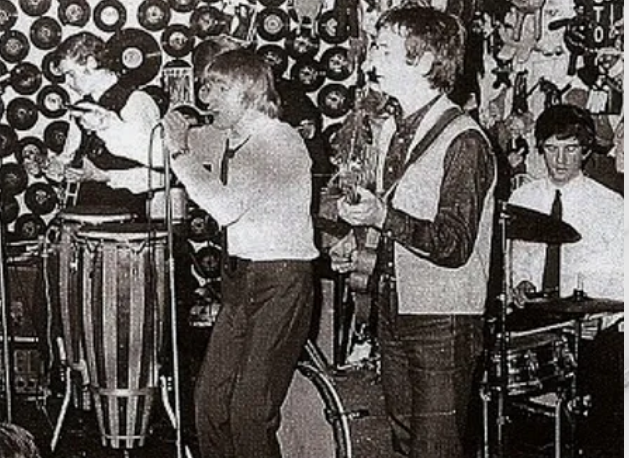
“They played their first two singles, ‘I Wish You Would’ and the classic ‘Good Morning Little Schoolgirl’, along with other tracks from ‘Five Live Yardbirds’”, remember’s Dave Manvell.
A Surprise In The Set
“Much to my surprise they also played ‘For Your Love‘.”
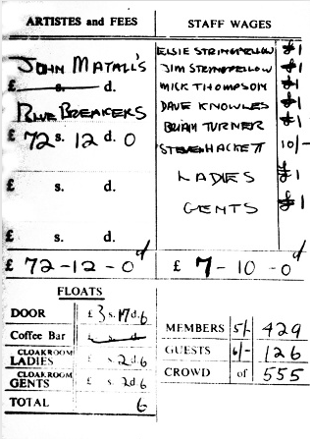
Not long after their appearance at the Mojo, Clapton left and joined John Mayall’s Bluesbreakers – another group that would become closely associated with the club.
For regulars, those performances became something to watch closely, particularly when it came to the guitarist.
“John and his group played quite a few times at the Mojo. For me, it was always interesting to see who was playing lead guitar in the band.”
Clapton’s time with the Bluesbreakers would lead to one of the most influential blues albums of the era.
“Eric played on the legendary album ‘Blues Breakers with Eric Clapton’. His performance at the Mojo in that period was outstanding.”
But the story didn’t end there. The revolving door of guitar talent continued.
“Not long after, Eric left the Blues Breakers. On his departure, Peter Green took his spot – only to leave not long after performing at the Mojo.”
For those who were there, it felt as though the Mojo sat at the centre of a constantly shifting musical landscape — a place where some of the greatest guitarists of the era passed through, often just before moving on to something even bigger.
Mojo gets The Move treatment
Dave Manvell remembers one night when it was clear from the moment he walked in that something different was about to happen.
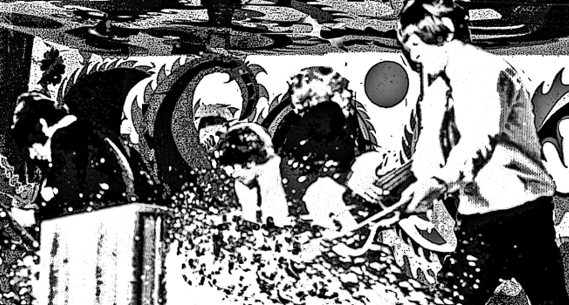
“On entering the club, I saw The Move had set up a line of TVs on the stage, around the front and onto the dancefloor. A large axe stood at the side of an effigy of Hitler. I could feel that a night of rock history was going to take place.”
The Move had already built a reputation for their chaotic, theatrical performances, combining music with destruction and spectacle. The crowd knew what to expect – or at least hoped they did.
“The crowd had been waiting expectantly to see what fate awaited Hitler and the TVs. We were not going to be disappointed.”
As the band took to the stage, the performance began to unfold.
“As the group stepped on stage, the TVs flickered on and the psychedelic experience burst upon us.”
But it was the finale that left the strongest impression.
“They started to play ‘Night of Fear’, and one of the group picked up the axe and buried it into each of the TVs. As he did this, each of the tubes imploded, and the silver coating from the screens produced a fog.”
Standing close to the front, Dave found himself caught in the middle of it.
“As usual I was near the front and was covered in the silver particles from the screens.”
The destruction didn’t stop there.
“Not content with that, he then set about chopping up Hitler’s effigy until little remained. By the end of the performance, the audience and the floor were covered in the silver particles.”
The Move were one of the most controversial bands of the time, known as much for their stunts as their music. Their single ‘Flowers in the Rain’ had been promoted with a cartoon depicting Prime Minister Harold Wilson naked in his bath – a move that led to a successful libel action, with all royalties from the record awarded to charity.
The record would also make history as the first ever track played on BBC Radio 1.
In later years, members of the band would go on to form the Electric Light Orchestra, achieving further success. But for those who saw them at the Mojo, it was the sheer impact of nights like this – loud, unpredictable and unforgettable – that stayed with them.
The day the Temptations Never Came… But Nobody Went Home Disappointed
A Paul Norton Mojo memory.
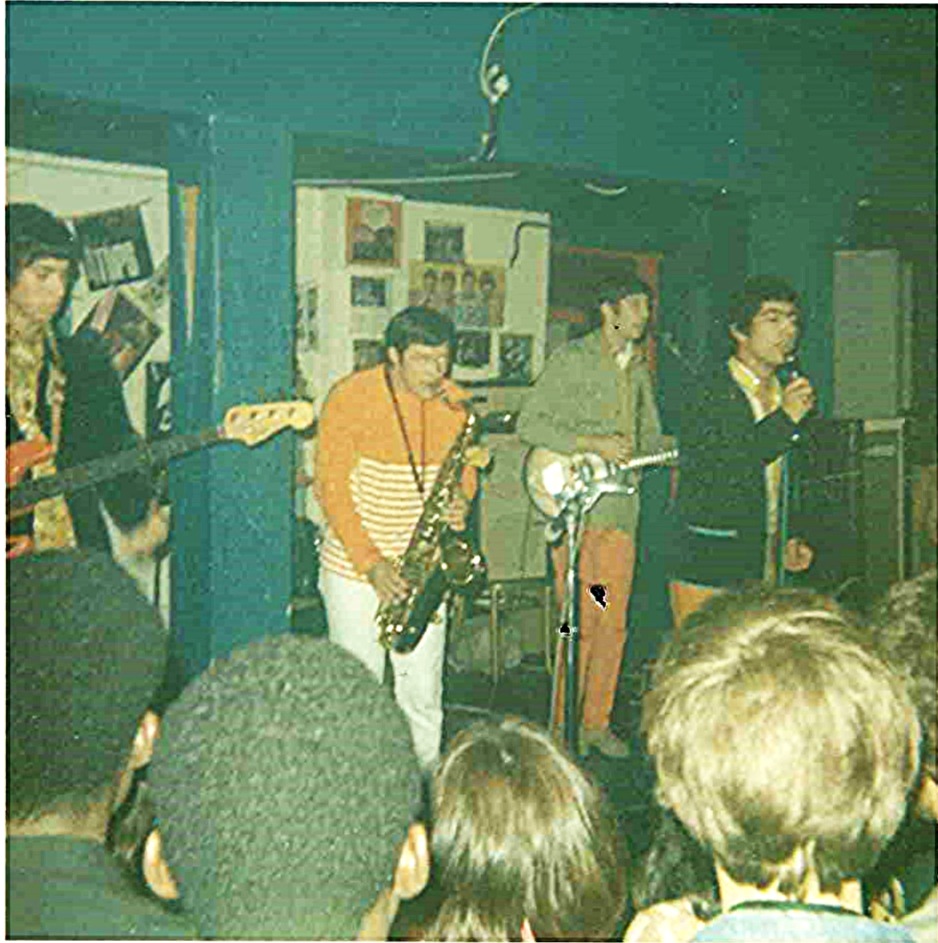
September 5th, 1967, and the Mojo is once again in an eager grip of anticipation in seeing another club favourite and top US soul act in action. Peter has managed to book one of the best Tamla Motown vocal groups from Detroit City.
Billed as The ‘Fabulous’ Temptations, all seemed ready for another great Mojo All Dayer of stage action and soul dancing.
Unbeknown to most of us there had been some rumours circulating which Peter and Geoff had picked up on. Peter ended up phoning the Temptations London agency in the UK. They informed Peter that the Temptations were not in England at that time.
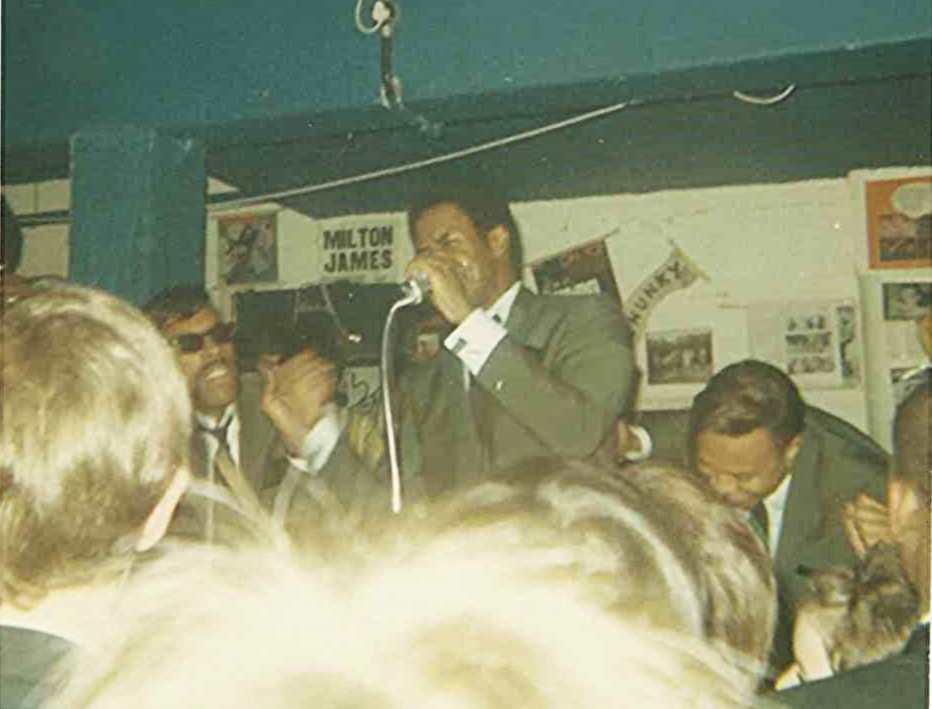
Too late now to cancel the whole All Dayer, and because the club entry fee was higher than normal at £1(!) Peter announced to us all from the stage about the fact that the ‘Fabulous’ Temptations were in fact not the real group. Anyone who wanted their money refunded could take it and leave. But Peter also added that as this group had travelled all the way from the States to play for us, maybe we could give them a chance.
Some took the refund and left, but as far as I can remember most of us stayed.
It turned out that we were glad we did, outside of the fact that there were 4 vocalists in the line-up as opposed to the real Temptations 5, you would have been hard pushed to know the difference. Backed by an excellent UK band The Clockwork Orange they stormed onstage in shiny mohair suits to the sounds of ‘Get Ready’ and performed an amazingly slick and top quality performance, with great vocals, group harmonies and stage dancing.
So much so that they took several encores before we let them leave.
After their tour of the UK the ‘Fabulous’ Temptations liked it so much here they decided to stay. At Peter’s suggestion they changed their name and became The Fantastics, had a new career in the UK and made some records you may remember! I believe Peter may have helped them get a recording contract too.
Myself and a mate Dave King got to know The Clockwork Orange, and, through them, The Fantastics, so when they were playing up this end of the country we used to ring up the clubs and get word to them to put us on the guest list. They were nice guys.
The back story.
The Fabulous Temptations were in fact The Velours from New Jersey. Their promoter was the Roy Tempest Organisation who started off as a fully legitimate booking agent of UK groups and visiting US soul and blues acts. These included the likes of Solomon Burke, Edwin Starr, The Spellbinders, Billy Stewart and many more.
This seem to change in 1967 when he realised he could book New York based soul groups quite cheaply and get them on UK tours under false names.
These fake groups included the Original Drifters (who were really The Invitations and actually played at the Mojo on September 23rd 1967!), the Fabulous Marvelettes (The Gypsies), the Isley Brothers (The Diplomats) and the Original Impressions (The Topics). He then seemed to become even more greedy and started using US and UK based fakes as solo artists such as Chuck Jackson, Carla Thomas and even a James Brown Junior!
The truth was even though it was a Roy Tempest con job, a lot of these fake artists and groups were actually very good and no doubt put on some really good shows for soul music fans. These days of course we would now know them as perfectly legal cover bands or tribute acts.
By mid 1969 the law and the legitimate record and artiste companies had caught up with Roy Tempest. He agreed to get out of the music business or be sued for an awful lot of money.
Dave’s experience with the Jimi Hendrix Experience
By Dave Manvell
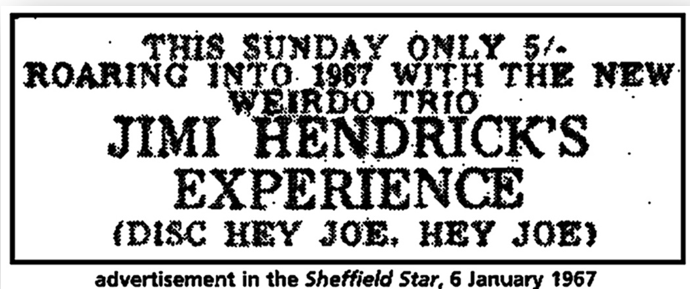
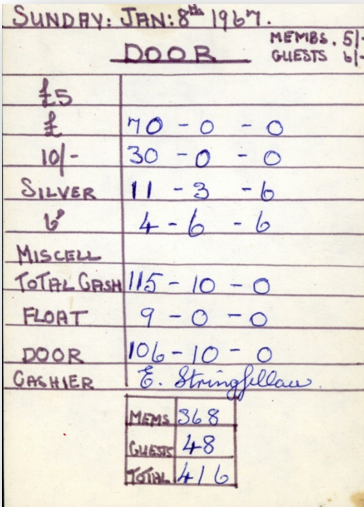
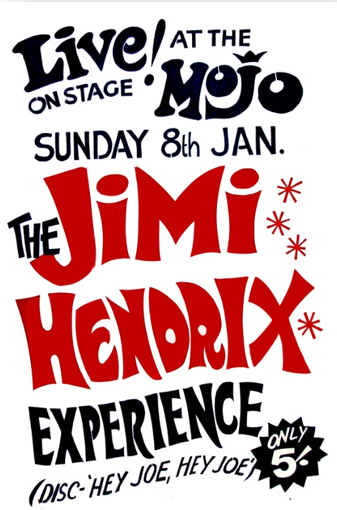
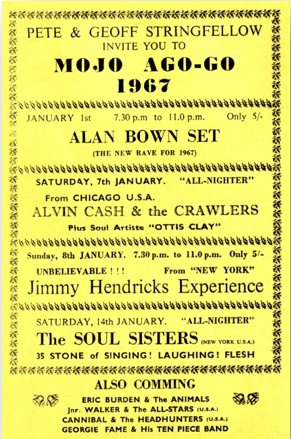
Peter booked The Jimi Hendrix Experience to play at the Mojo after being told that Hendrix was a brilliant and wild guitarist whom he simply had to book. Which he did, for the princely sum of £50.
The Jimi Hendrix Experience nearly didn’t get to play that night.
The previous evening they had been playing at the New Century Hall in Manchester. After the gig, and having gone back to their hotel to change, they decided to check out some of Manchester’s clubs, one in particular being the now legendary Twisted Wheel.
They arrived at the Wheel during a police raid and were told to come back later. As they walked away they were suddenly grabbed by plain-clothes police officers. They were roughed up a bit, and Noel Redding was left hanging on some iron railings by his greatcoat. During the incident Noel sustained cracked ribs, and two police officers were later dismissed following the affair.
Jimi had his passport taken from him but was otherwise left alone once the police discovered he was American. All three of them, rather shaken by the incident, decided to return to their hotel
(When I met Noel in Manchester in 1997, he recalled the incident).
That night at the Mojo we waited with bated breath, hoping Noel would be fit enough to play. Fortunately, although he was clearly in pain, he did.
Peter Stringfellow takes up the story
“The Experience arrived at the club and I was completely unaware of the previous night’s incident in Manchester.
“I knew nothing about his music and even less about his reputation for taking drugs.
“The Manchester police must have tipped off the Sheffield police about the previous night’s incident. It was before the advent of the drug squad, so the police sent the fire brigade on the pretext of carrying out a numbers check in the club.
“Two burly firemen arrived and said to Jimi, ‘Come on, where are the drugs?’
“Jimi replied, ‘Hey man, there’s no drugs in here.’
“The firemen weren’t convinced and had a look round, but they had no idea what drugs actually looked like.
“I suggested they apologised, as Mr Hendrix had flown in from America to do the job. So they said, ‘Sorry about that, laddie.’
“Jimi looked up from what appeared to be a joint and simply said, ‘Hey… cool, man.'”
Dave Manvell remembers the gig
It was, for me, a night that would go down in rock history. Nothing like it had ever been seen at the Mojo before. It was a night high on adrenaline — or possibly other stimulants!
I was standing on the floor directly in front of Jimi. The stage was only about 12 or 15 inches high. I couldn’t have got any closer to him; it almost felt as though I was on stage with him.
I had never heard a guitarist like him. From his guitar and amplifier he produced sounds and controlled feedback that were simply unreal.
He started playing The Star-Spangled Banner, which morphed into God Save the Queen. From there he launched into something he called “The Blitz”. It featured wailing sirens and explosions, all generated from his guitar and amplifier.
After he finished his first set he jumped off the stage beside me and asked me where the toilets were. As I showed him the way he told me he wanted some gear, so I told him this was the place for it. It all seemed very innocent in those days — usually Mother’s Little Helpers or a few of Granny’s pills.
During the second set he played Purple Haze, which he told us they were going to record that week.
He also played Wild Thing, an incredible version of Killing Floor, and some tracks from the forthcoming album.
I remember he had two Fender Stratocasters — one sunburst and one dark blue. He changed to the dark blue one to finish the performance, proceeding to attack the amplifiers before finally throwing the guitar onto the floor as he left the stage, leaving it to howl away in its death throes.
Musically, it was a turning point in my life.
I remember going home after the gig and, unable to sleep, I wrote this poem:
GLIMPSE
Through the haze
Through the light
Into tomorrow
Stars light the Purple Haze
Tall bronze man running into the haze
Disappears into the velvet of the night.
________________________________
I remember ordering the Are You Experienced album and waiting for what seemed like a lifetime before it was finally released.